The 7 Stages of Building a House in Nepal — and What to Track at Each One
From naksa pass to final finishing: the seven stages of a residential build in Nepal, how long each takes, and exactly what to record at every stage.
GharNaksa Team
Construction tracking for Nepal
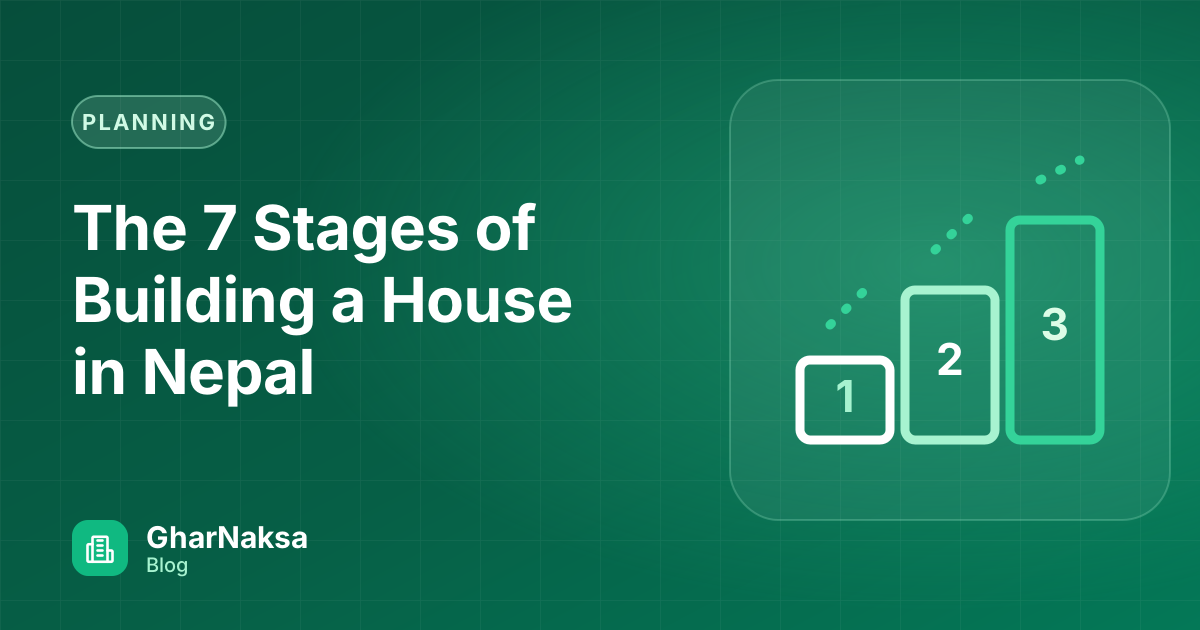
A house build feels chaotic from the inside — trucks arriving, crews changing, decisions demanded daily. But underneath, every residential build in Nepal follows the same seven-stage arc. Once you can see the stages, you know what is coming, what it will cost, and — crucially — what you should be writing down at each point.
Stage 1: Design and naksa pass (1–3 months)
Before a single brick moves, your drawings must be approved by the municipality — the naksa pass. You will need the land ownership certificate (lalpurja), a site plan, architectural drawings from a registered engineer or architect, and structural drawings for anything beyond a simple design. Fees vary by municipality and built-up area. Shape the layout with our house design in Nepal guide, then follow the full Naksa Pass process.
- Track: designer and engineer fees, municipal charges, every version of the approved drawings.
- Watch out for: starting work before approval — municipalities can and do issue stop-work orders.
Stage 2: Site preparation and foundation (3–6 weeks)
Clearing, layout, excavation, then the foundation — footings and the plinth beam. This is where soil surprises live: weak or wet soil means deeper foundations and a bigger bill, which we covered in our 2026 cost breakdown.
- Track: excavation labor, cement, rod, sand, aggregate quantities and rates; photos of rebar before concrete is poured.
- Watch out for: concrete poured before you have photographed the reinforcement. Once it sets, there is no way to verify what went in.
Stage 3: The RCC frame (2–4 months)
Columns, beams and slabs rise floor by floor. This is the most material-hungry stage — cement and rod deliveries arrive constantly, and each slab pour is a milestone (and a big single-day labor cost). Curing time between slabs sets your pace; rushing it weakens the structure.
- Track: every cement and rod delivery with supplier, quantity and rate; mason-days per floor; dated photos of each slab before and after pouring.
- Watch out for: material wastage and untracked site stock — this stage is where most of the budget overruns begin.
Stage 4: Brickwork and roofing (1–2 months)
Walls go up and the structure becomes a recognizable house. Brick quality varies widely between kilns and seasons, so record which supplier delivered which lot. Openings for doors and windows get fixed now — changes after this point cost real money.
- Track: brick deliveries by lot and supplier, wall-by-wall progress photos, any design changes with their agreed extra cost.
Stage 5: Electrical and plumbing rough-in (3–6 weeks)
Conduits, wiring runs, water and drainage pipes go into walls and floors before plaster seals them in. Everything installed in this stage disappears from view — which is exactly why it needs the most photographs.
- Track: photos of every pipe and conduit run before plaster, fixture counts against the electrical plan, plumber and electrician payments.
- Watch out for: skipped pressure-testing of water lines. Finding a leak after tiling is ten times the cost.
Stage 6: Plaster and finishing (2–4 months)
Plaster, flooring, tiles, doors and windows, painting, kitchen and bathrooms. Finishing is where budgets quietly balloon — every choice is visible, so every choice tempts an upgrade. Half your total budget can flow through this stage.
- Track: each finishing contract separately (tiling, painting, carpentry), advances versus completed work, and every upgrade decision with its price.
Stage 7: Handover and completion certificate
Final municipal inspection against the approved naksa, utility connections, and settlement of accounts with your contractor and suppliers. If you have tracked the previous six stages, settlement is a printout, not an argument.
One habit ties all seven stages together: the daily log. Ten minutes a day recording deliveries, crew and progress — we wrote a whole guide to the daily site log habit. And if you are managing the build from another country, see the NRN guide for how to stay in the loop remotely.