10 Reasons Construction Budgets Blow Up in Nepal (and How to Stop Each One)
Why do house construction budgets in Nepal overrun by 20–40%? The ten most common causes — from design changes to untracked cash — and the fix for each.
GharNaksa Team
Construction tracking for Nepal
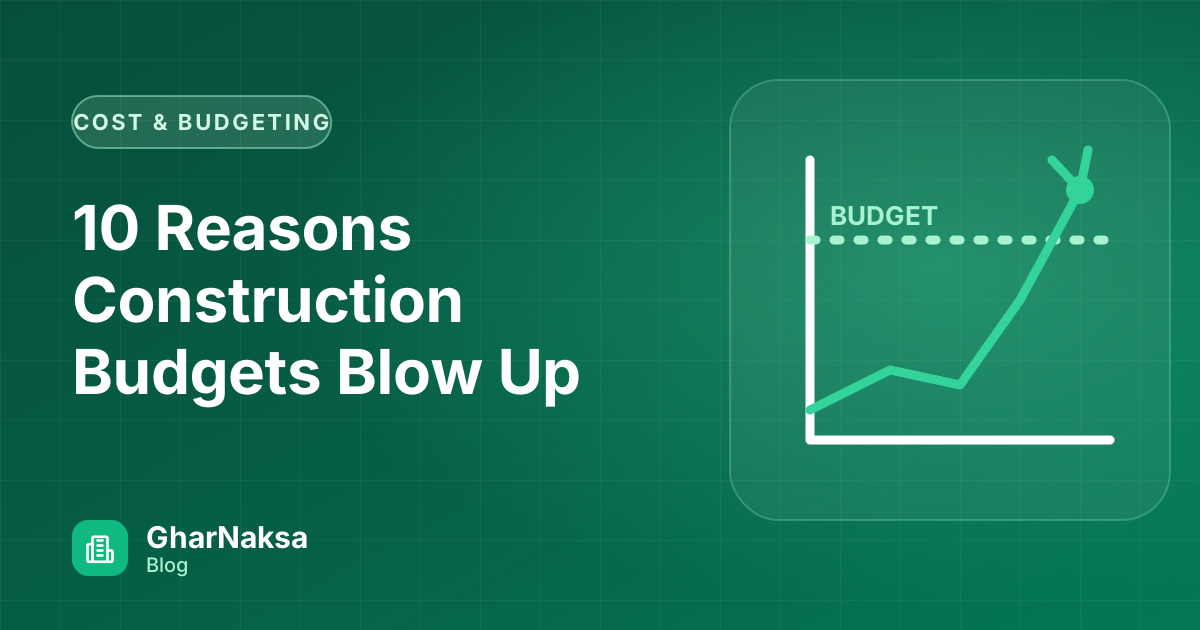
Ask around: almost nobody in Nepal finishes a house at the number they started with. Overruns of 20–40% are so common they are treated as normal. But an overrun is rarely one disaster — it is ten small leaks, each too small to fight, none of them measured until the end.
Here are the ten, in roughly the order they will find you.
1. The budget was never real
A round number borrowed from a neighbor’s build two years ago is a wish, not a budget. Start from a stage-by-stage estimate grounded in current rates — our 2026 cost breakdown is the place to begin — and add a written 10–15% contingency.
2. Design changes after concrete
Every “while we’re at it” after the slab is poured costs triple. Fix: freeze the design before the foundation, and price every later change in writing before saying yes.
3. Soil surprises
Weak soil discovered during excavation can add lakhs in foundation work. Fix: a soil test before design costs a few thousand rupees and removes the single biggest early-stage unknown.
4. Material rate drift
Cement, rod and brick prices move seasonally — and quietly, on your bills. Fix: record the rate on every delivery, as in our material tracking system, so drift shows on delivery two, not delivery twenty.
5. Short deliveries and pilferage
Sand trips that measure 20% light; cement bags that walk off unmanaged sites. Fix: count at the gate, photograph the challan and the pile, and log stock-in versus usage per stage.
6. Ghost labor and rate creep
Eight billed, six on site; rates that rise without anyone agreeing. Fix: the two-minute daily attendance record from our mason-day guide.
7. Advances nobody wrote down
Cash advances to crew and contractor, given in good faith, forgotten by settlement — then paid twice. Fix: every rupee out gets logged the day it leaves, against a name.
8. Finishing creep
The showroom tile, the better bathroom fitting, the imported main door. Individually reasonable; together, lakhs. Fix: set a finishing budget per room before the showroom visit, and track each upgrade decision against it.
9. Pauses and restarts
A build that stops for six months restarts at new prices, with a new crew that needs to relearn the site. Fix: if funds arrive in waves — common for NRN-funded builds — plan stage boundaries around the waves instead of stopping mid-stage.
10. Nobody could see the running total
This is the leak that enables the other nine. When spend lives in a shoebox of bills and three people’s memories, the overrun is only discovered at the end — when nothing can be done. Fix: one shared, running record of every material, mason-day and payment, visible to owner, engineer and contractor alike.
That shared running record is exactly what GharNaksa provides — a live ledger of materials, labor and payments with photos at every stage, and a PDF statement whenever accounts are settled. Ten minutes a day, as described in the daily site log habit, keeps the whole system alive.