Septic Tank Size for a House in Nepal: Volume, Chambers & Soak Pit
Size a household septic tank in Nepal from occupants, wastewater and retention days—chamber split, freeboard and soak-pit notes for planning.
GharNaksa Team
Construction tracking for Nepal
Most Nepal houses outside a sewered core still need a septic tank. Undersize it and you desludge every few months—or worse, the soak pit fails in the monsoon. Oversize it blindly and you excavate a concrete bunker you did not need. The useful first number is working volume, not a Facebook rumour of “8 feet by 8 feet.”
Use the septic tank size calculator for occupants, litres per person per day, retention days and freeboard, then read a practical two-chamber split. Pair it with house plumbing cost and water tank size. Excavation for the pit is a real line in the earthwork calculator.
Start from people, not from a hole in the ground
- 1Count usual occupants, not the wedding-week peak. Add a modest guest factor if the house is a family gathering place.
- 2Pick wastewater per person (often 80–150 L/day depending on fixtures and whether greywater is separated).
- 3Choose retention — commonly 24–72 hours of working volume for household tanks.
- 4Add freeboard so scum and inlet levels work; working volume is not the same as brick-to-brick capacity.
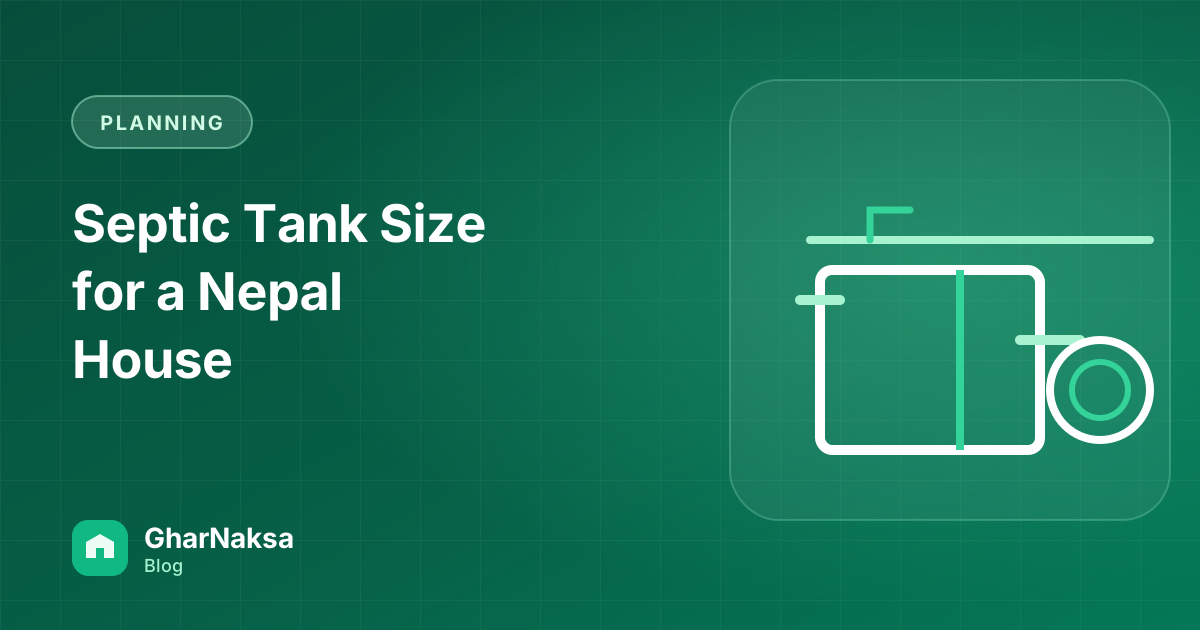
- 5Split chambers (typically ~2/3 + 1/3) and place a soak pit in soil that can actually percolate.
What the calculator will not catch
- High water table — soak pits fail; you may need a different disposal method.
- Clay or rock — percolation, not tank volume, is the bottleneck.
- Kitchen grease — a grease trap before the tank saves the first chamber.
- Distance from well and boundary — health setbacks beat a tidy backyard layout.
- Desludging access — a tank you cannot reach with a suction hose will be ignored until it overflows.
Do not connect roof rainwater into the septic tank. Rain belongs in rainwater harvesting or a soakaway of its own. Mixing stormwater washes solids into the soak pit and kills the system.
Budget the box, not only the volume
RCC or brick walls, a sealed cover, plaster, waterproofing on the wet face, inlet/outlet tees, a vent, and the soak pit rings are the cost—not “septic” as a round number. Log the as-built location on the site plan in GharNaksa so a future driveway does not get poured on the only access cover.
Frequently asked questions
Quick answers
What size septic tank do I need for a family in Nepal?
A common planning method is occupants × daily wastewater × retention days, plus freeboard. A family of five at 120–150 litres wastewater per person and 2–3 days retention often lands near 1,500–2,500 litres of working volume before freeboard. Confirm with the designer and local municipal rules—this is not a permit drawing.
How many chambers should a house septic tank have?
Two chambers are the usual residential pattern: a larger settling chamber (about two-thirds) and a smaller outlet chamber, then a soak pit or drain field. Three chambers appear on larger loads. Baffle openings must sit at the right level so scum stays in the first chamber.
Can I discharge a septic tank into the storm drain?
No. Septic effluent needs a soak pit, drain field or a legal sewer connection. Storm drains and road culverts are not treatment. Municipalities increasingly reject plans that show a tank with nowhere for the liquid to go.