Foundation Cost in Nepal: Footings, Raft & What Drives Price
Foundation cost in Nepal for RCC houses—isolated footings vs raft, excavation and concrete drivers, planning share of the build budget, and free quantity tools.
GharNaksa Team
Construction tracking for Nepal
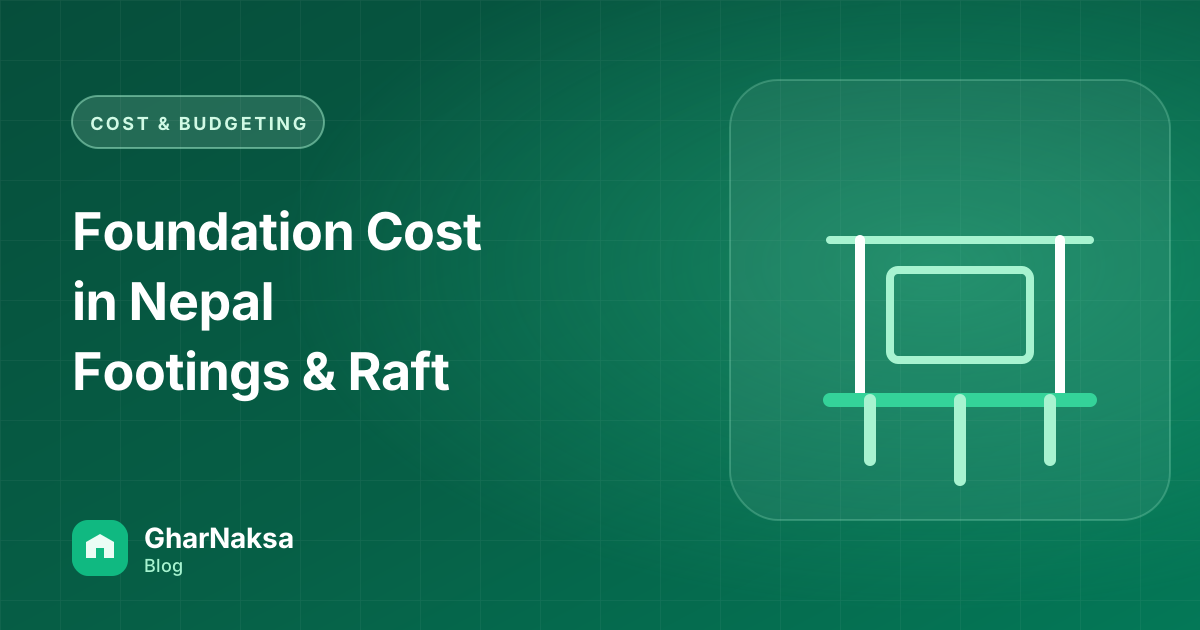
Foundation cost in Nepal is where many first-time homeowners under-budget. Footings, raft, plinth beams, backfill and damp-proofing happen before any “beautiful elevation” photo—and they consume steel, cement, aggregate, excavation and skilled labour in a short, cash-heavy window.
Start with the free foundation cost calculator for a substructure planning budget, then tighten quantities with the column footing calculator, excavation calculator, concrete materials, formwork area and rebar weight. Use cement bags for house for a whole-build cement ceiling. Whole-house context: 2-storey cost and construction cost Nepal. Extra structure tools: tools.housedesigninnepal.com.
Common foundation types on Nepali house sites
- Isolated / combined footings — typical for regular column grids on competent soil; cost scales with footing size and depth.
- Strip footings — more common under load-bearing or closely spaced walls.
- Raft / mat foundation — used where soil is weak or loads demand it; more concrete and steel early, sometimes less risk later.
- Plinth beam and plinth filling — not optional cosmetics; they tie the system and set the ground-floor level.
What drives foundation cost
- 1Depth and water — deeper digs, shoring and dewatering raise labour and time; see excavation guide.
- 2Concrete volume and mix — footing and raft pours are large single events; bag and gitti logistics matter (sand & aggregate).
- 3Reinforcement density — rafts and large footings can surprise clients who only budgeted “slab steel” habits; use the rebar calculator.
- 4Formwork and curing — quality formwork is time; poor curing is wasted cement.
- 5Backfill quality — cheap uncontrolled fill settles; compaction is part of foundation performance.
- 6Access — narrow gullies in older settlements increase manual handling cost versus tipper-friendly plots.
Planning share of the total house budget
As a rough planning split (not a contract), substructure work through plinth often lands around 15–30% of a full residential construction budget depending on soil, storeys and whether interiors are included in the total. Two-storey homes on difficult soil skew higher at the base. Always rebuild the number from quantities × local rates, not from a percentage alone.
A practical estimation sequence
- 1Freeze column grid and foundation type with the structural engineer.
- 2Estimate excavation volume (length × width × depth of pits/trenches) in the excavation calculator.
- 3Take concrete volumes from footing/raft schedules; run concrete materials.
- 4Take bar schedules into the rebar weight & cost tool.
- 5Add formwork, labour, waterproofing/DPC and backfill as separate lines—not a vague “misc”.
- 6Log every truck and steel delivery in GharNaksa on pour day so NRN clients see the same truth.
Quick FAQ
How much does a house foundation cost in Nepal?
It depends on type, depth, soil and house size. Build from excavation + concrete + steel + labour quotes for your drawings. Percent-of-house rules only help you notice if a bid is wildly off.
Is raft always more expensive than footings?
Raft usually uses more concrete and steel up front. On poor soil it can still be the correct (and ultimately cheaper-risk) choice. Compare engineered options—not Instagram anecdotes.
Can I reuse excavated soil for fill?
Sometimes, if the engineer accepts it and you compact in layers. Organic topsoil and debris do not belong under floors. Disposal trips are a real cost line—estimate them early.