Column Footing Calculator Nepal: Concrete, Cement & Steel
Estimate isolated column footing concrete, cement bags, sand, aggregate and rough steel for Nepal houses from pad size, thickness and count.
GharNaksa Team
Construction tracking for Nepal
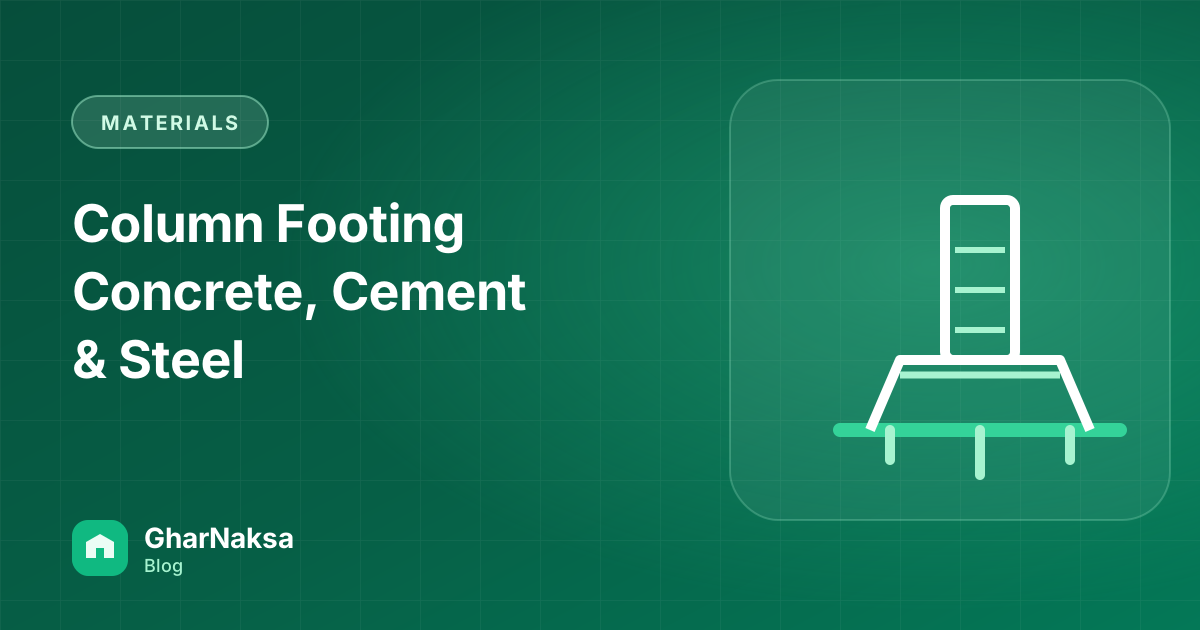
Isolated column footings (pad footings, khamba bases) are how most Nepal RCC houses start. One pad looks small. Sixteen of them, plus pedestals, PCC blinding and excavation, are a cash-heavy first month. The search column footing calculator is really: how much concrete, how many bags, and is the contractor’s lump sum even in the right range?
Use the column footing calculator for identical pads: plan size, thickness, count, mix and a steel assumption. For the whole substructure budget open the foundation cost calculator. Dig volume belongs in the excavation calculator. Context: foundation cost in Nepal.
Measure the pad, not the column
- 1Read L × B × D from the footing schedule, not from the architectural grid.
- 2PCC blinding (often 75–100 mm) is a separate, leaner mix—do not price it as RCC.
- 3Stepped or sloping footings: split into rectangles or use average area × depth.
- 4Multiply by count per group, then add 3–5% wastage for mixer and level correction.
- 5Convert to bags with the same mix method as the concrete mix guide.
Example: 12 interior pads at 1.5 × 1.5 × 0.40 m = 0.90 m³ each → 10.8 m³. 4 corner pads at 1.8 × 1.8 × 0.45 m = 1.46 m³ each → 5.8 m³. Total ≈ 16.6 m³ RCC before wastage—plus PCC, plus any combined strip under a party wall. That is the number to take to the cement bags and rebar tools.
Steel, excavation and what people forget
- Bottom mesh and dowels — order from the bar bending schedule; a kg/m³ factor is only a budget placeholder.
- Cover blocks and chairs — cheap until you skip them and the mesh sits on mud.
- Excavation extra width — you cannot compact against a vertical cut the exact size of the pad. See earthwork volume.
- Dewatering — valley sites in monsoon can double labour for the same concrete volume.
- Raft vs isolated — if pads start overlapping, you may already be in raft territory; price that with foundation cost.
From calculator to first pour
Run groups in the footing calculator, add formwork area for the pad sides, then log each footing as a line in GharNaksa (size, bags accepted, photos of the mesh before concrete). Isolated pads are easy to “finish” on WhatsApp and still miss two corner pits.
Frequently asked questions
Quick answers
How do you calculate isolated footing concrete volume?
For a rectangular pad, volume = length × width × thickness × number of identical footings. A 1.8 m × 1.8 m × 0.45 m pad is 1.46 m³ each. Ten such pads are 14.6 m³ before wastage. Trapezoidal or stepped footings need the average of top and bottom areas × height.
How much steel is in a house column footing in Nepal?
Planning figures often sit around 60–90 kg of steel per cubic metre of footing concrete for typical isolated pads, but the bar schedule on the drawing is the only number you should order against. Use a kg/m³ allowance only before the structural drawing exists.
Are column stubs included in the footing volume?
Include the pedestal or starter column only if it is poured with the footing and not already in the column concrete take-off. Double-counting stubs is a common way BOQs inflate early packages.